
How to Check Criminal History in Lee County
A Lee County criminal history check starts by matching the question to the record holder. The Sheriff Inmate Search and Recent Arrests pages address local custody. The Circuit Clerk and Alabama trial-court services address filed cases. ALEA provides a fingerprint-based process for a person reviewing their own statewide criminal-history information. Municipal matters may remain with Auburn, Opelika, or Phenix City instead of the county clerk.
Use the full legal name, known spelling variants, date of birth when a form accepts it, and any case or booking number already in hand. Then compare dates, court, and charge text. A name alone is weak proof of identity, and a jail charge may change when a prosecutor files the case.
- Choose custody, agency report, court case, or statewide CHRI as the target record.
- Search the matching official channel with the best known name or case identifier.
- Read the result in context, including its date, source office, status, and jurisdiction.
- Request the underlying report, case-action summary, judgment, or certified record from its custodian.
- Use ALEA's fingerprint review and challenge route when the statewide record concerns you and appears wrong.
For a view of the county's main public-service gateway, see the Lee County Sheriff's Office source.
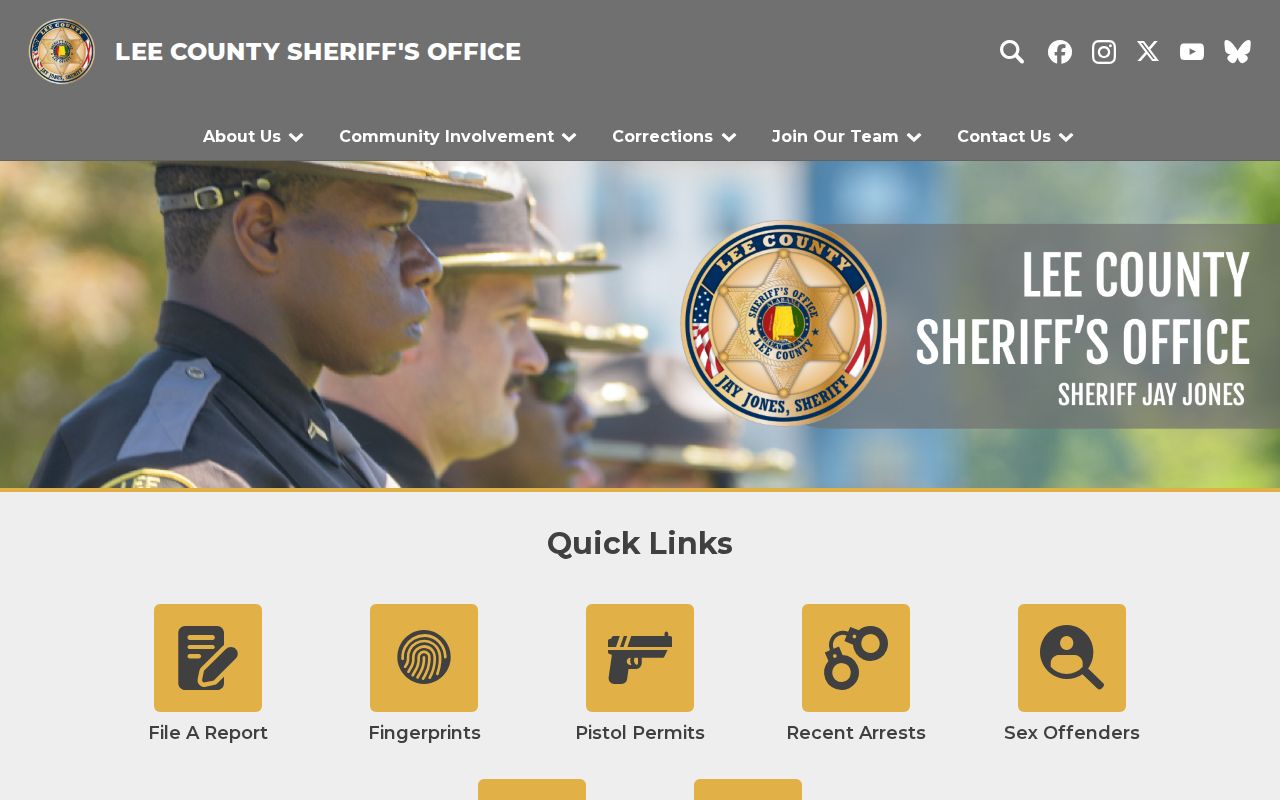
The sheriff source is one door into Lee County records, but court and state files still require their own channels.
Four Lee County Record Doors
Four products often get called a criminal record even though they answer different questions. The Lee County jail roster shows current local custody. A police or sheriff report records an alleged incident or arrest. A clerk file shows formal charges, hearings, rulings, disposition, and sentence. ALEA CHRI links fingerprint-based arrest cycles to dispositions reported back by courts.
| Channel | Best use | Key limit |
|---|---|---|
| Sheriff roster | Current or recent Lee County booking | Not a statewide or final court history |
| Creating agency | Incident or arrest report | Not the filed case outcome |
| Circuit, District, or municipal clerk | Docket, order, judgment, sentence | Limited to that court's cases |
| ALEA self-review | Own fingerprint-linked Alabama CHRI | Not a public name-search system |
This split explains why a no-match in one Lee County system does not settle the question. The Lee County event may sit in a city court, an older paper file, a different custody system, or a state record that has not yet received its disposition.
Official Alabama Background Checks
The Alabama Law Enforcement Agency, State Bureau of Investigation, Criminal Justice Information Services Division maintains the state fingerprint repository. Alabama does not offer an unrestricted public name search of that repository. The Alabama Background Check portal is limited to qualifying entities. A member of the public who wants to inspect their own Alabama CHRI uses ALEA Form 46 with fingerprints, accepted photo identification, and the required payment.
An authorized law-enforcement agency with an FBI-issued ORI must take prints on an FD-258 applicant card or approved AFIS card. ALEA lists a $25 fee by cashier's check or money order, $5 for each extra copy, and a four-to-five-week processing estimate. The packet may be mailed to ALEA, ATTN Background Checks, P.O. Box 1511, Montgomery, AL 36102-1511, or hand-delivered at 301 S. Ripley Street.
The official ALEA background-check source distinguishes its qualifying-entity portal from personal Lee County record review.
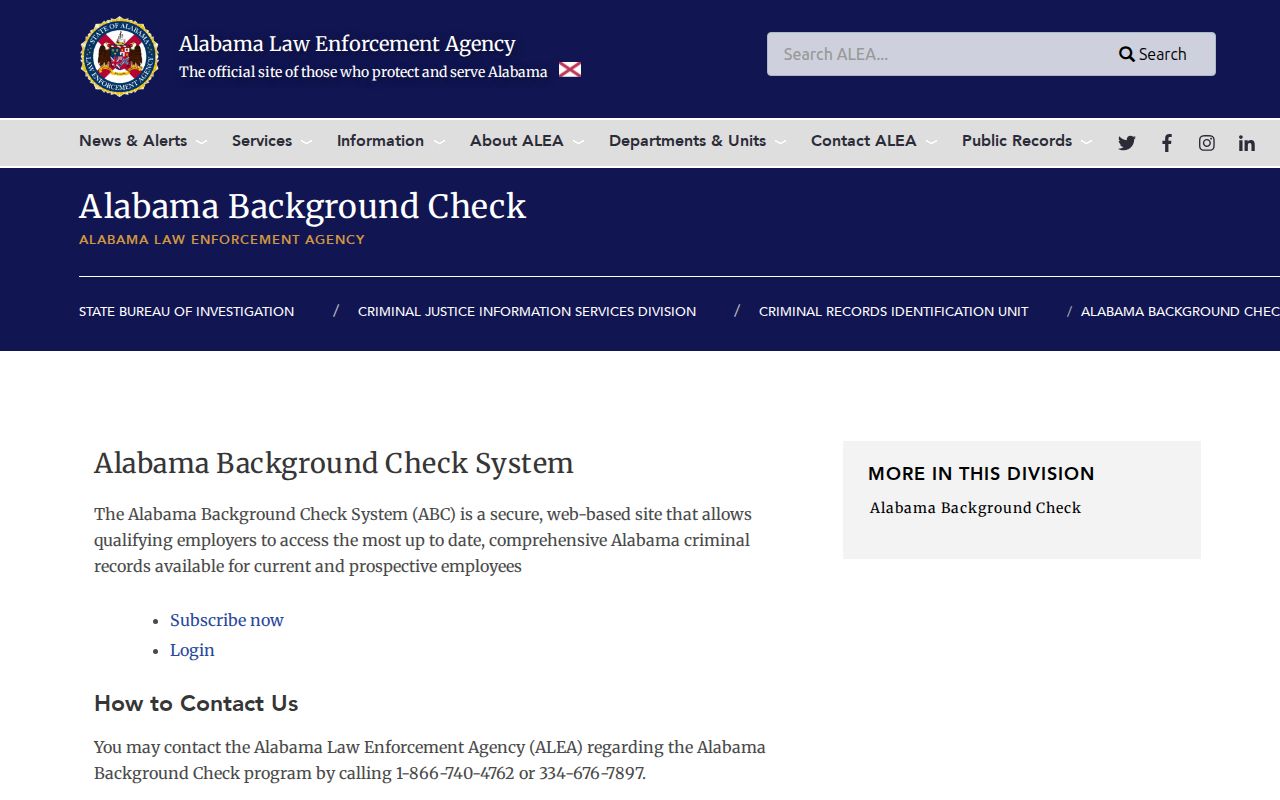
That distinction keeps a personal Lee County criminal record review on the correct fingerprint-confirmed route.
| Self-review item | Requirement or cost |
|---|---|
| Form | ALEA CJIS Form 46 |
| Identity | Accepted current photo identification |
| Fingerprints | FD-258 or approved AFIS card from an authorized agency with an FBI ORI |
| First copy | $25 cashier's check or money order |
| Extra copy | $5 each |
Lee County Court Record Desks
The T.K. Davis Justice Center at 2311 Gateway Drive in Opelika brings many Lee County criminal record functions into one building. The Circuit Clerk's public counter is Suite 104, open 8:30 a.m. to 4:30 p.m., at 334-737-3526. Circuit Criminal routes through 334-737-3510 or 334-737-3547. District Criminal and Traffic uses 334-737-3506, while the criminal front counter uses 334-737-3518 or 334-737-3504.
Lee Circuit Clerk
2311 Gateway Drive, Suite 104
Opelika, AL 36801
334-737-3526
Weekdays, 8:30 a.m. to 4:30 p.m.
Lee Sheriff Central Records
1900 Frederick Road
Opelika, AL 36801
334-749-5651
Weekdays, 8 a.m. to 5 p.m. Central
Lee District Attorney
2311 Gateway Drive, second floor
Opelika, AL 36801
334-737-3446
DA-held records only
The Lee County clerk holds pleadings, orders, dispositions, warrants after they become public, and court copies. The Lee County DA keeps its own working and office records. The sheriff holds jail data and sheriff-created reports. Going to the right Lee County counter first saves a misdirected request.
Types of Criminal Records
Lee County criminal records form in stages. The arresting agency creates an incident or arrest report. The jail creates a booking record. The prosecutor and clerk create the filed case. Courts send outcomes to ALEA. Supervision, prison, and registry offices then maintain separate products tied to later stages.
- Arrest and booking records: document an allegation, intake, charge wording, bond, and local custody rather than guilt.
- Criminal court files: hold the complaint or indictment, docket, rulings, disposition, judgment, sentence, and financial entries.
- Fingerprint-linked CHRI: connects reported arrest cycles with reported Alabama outcomes for identity-confirmed self-review.
- Warrant records: begin with the issuing court and executing agency; unserved or sealed warrants are restricted.
- Custody and supervision records: divide among the Lee jail, ADOC, the sentencing court, and the state probation and parole system.
- Registry records: show information authorized for public notification, not a person's full criminal history.
Lee County context matters most. An arrest is not a conviction, a complaint is not a judgment, and a registry listing is not a substitute for the underlying Lee County case file.
Lee County Booking Record Flow
At Frederick Road, jail staff create a booking event, capture identifying information, fingerprints, a photograph, charges or holds, and bond status. Fingerprints and arrest-cycle data begin the report to ALEA. A prosecutor may later change which charge is filed. The court then reports the disposition, which must be matched to the correct arrest cycle in the repository.
Record flow: Incident or arrest › Lee County booking › prosecutor's charge › clerk case file › court disposition › ALEA update.
Reporting lag, old Lee County paper files, or unmatched identifiers can leave a gap. When the record is your own, obtain the fingerprint-confirmed ALEA copy and use its challenge table to identify the date, agency or court, disputed charge or disposition, requested correction, and official proof.
What a Lee County Criminal Record Shows
The fields depend on which Lee County record is open. ALEA CHRI groups identity details, arrest cycles, reported Lee County court outcomes, and later sentence or supervision entries. A Lee County court file adds the charging instrument and docket. A booking card is narrower and can omit the arresting agency, court date, statute, and disposition.
| Name & Identifiers | Name, aliases, date of birth, sex, race, and repository identifiers where authorized. |
|---|---|
| Arrest / Booking Data | Event date, creating agency, booking time, initial charge, bond, and custody data, depending on the source. |
| Charges & Filings | Initial offense text may differ from the complaint, indictment, or later amended charge. |
| Disposition | Dismissal, nolle prosequi, acquittal, conviction, or other reported outcome. |
| Sentence | Term, fine, restitution, probation, custody, or other judgment terms when part of the file. |
| Custody / Supervision | County jail, ADOC, probation, and parole status reside in different systems. |
- Disposition
- The outcome of a charge, not merely the latest docket event.
- Nolle prosequi
- A prosecutor's decision to stop pursuing a charge.
- Docket
- The court's dated list of filings, settings, rulings, and other case events.
- Expungement
- Alabama's statutory process for removing eligible records from ordinary access.
Lee County Warrant Checks Stay Offline
No official public active-warrant search was found for Lee County. The magistrate instructions state that an arrest warrant is not public until served. A person who suspects an unserved warrant should appear at the Sheriff's Office rather than rely on an online name search. Clerk routing includes E-Warrants and Expungements at 334-737-3501 and juvenile or over-the-counter warrants at 334-737-3553.
Municipal fallbacks are Auburn Municipal Court at 334-501-3180, Opelika Municipal Court at 334-705-5190, and Phenix City Municipal Court at 334-448-2780. Once served and public, a warrant copy may be requested from the clerk or followed through its filed case. Sealed, juvenile, and unserved warrant material remains outside ordinary public access.
Suspected warrant: use the sheriff counter and correct court phone chain. Do not treat a web no-match as clearance.
Public Access Laws
The Alabama Public Records Law begins with a citizen's right to inspect and copy public writings, but record-specific limits still control. Lee County criminal history access changes with the custodian and the kind of file. Juvenile material, expunged matters, protected victim data, unserved warrants, and restricted state CHRI do not become open merely because another court document is public.
Key Alabama rules:
Alabama Code §§ 36-12-40 and 36-12-41 establish the general public-writings inspection and copying framework.
Alabama Code § 41-9-601 penalizes obtaining or sharing criminal-offender information by false pretenses or without authority.
Alabama Code § 41-9-643 provides the personal review and challenge process for state criminal-history information.
Alabama Code §§ 15-27-1 through 15-27-21 govern Alabama expungement eligibility, notice, orders, and limited later disclosure.
Alabama Rules of Judicial Administration Rule 30 governs public court-record inspection, copies, and charges.
The official Code of Alabama source provides the current text used for Lee County access decisions.
The statute gateway is the right place to confirm current language before relying on a restriction or request right.
Lee County Supervision Is Split
Adult probation and parole are state-run in Alabama. Lee County is served by the Alabama Bureau of Pardons and Paroles Opelika Field Office in Suite A30 of the T.K. Davis Justice Center. It operates weekdays from 8 a.m. to 4:30 p.m. at 334-745-3191. The Opelika Day Reporting Center Lite is at 2213 Center Hills Drive and can be reached at 334-704-8080 during the same listed weekday hours.
No general public probation name roster was identified. Start with the sentencing case to confirm whether probation was ordered and to read later modification, delinquency, revocation, or completion events. Use ADOC for state prison custody. Public Board hearing calendars can confirm a listed event, but an absent entry does not prove that no supervision exists.
The Opelika Field Office source shows the local Lee County supervision contact.
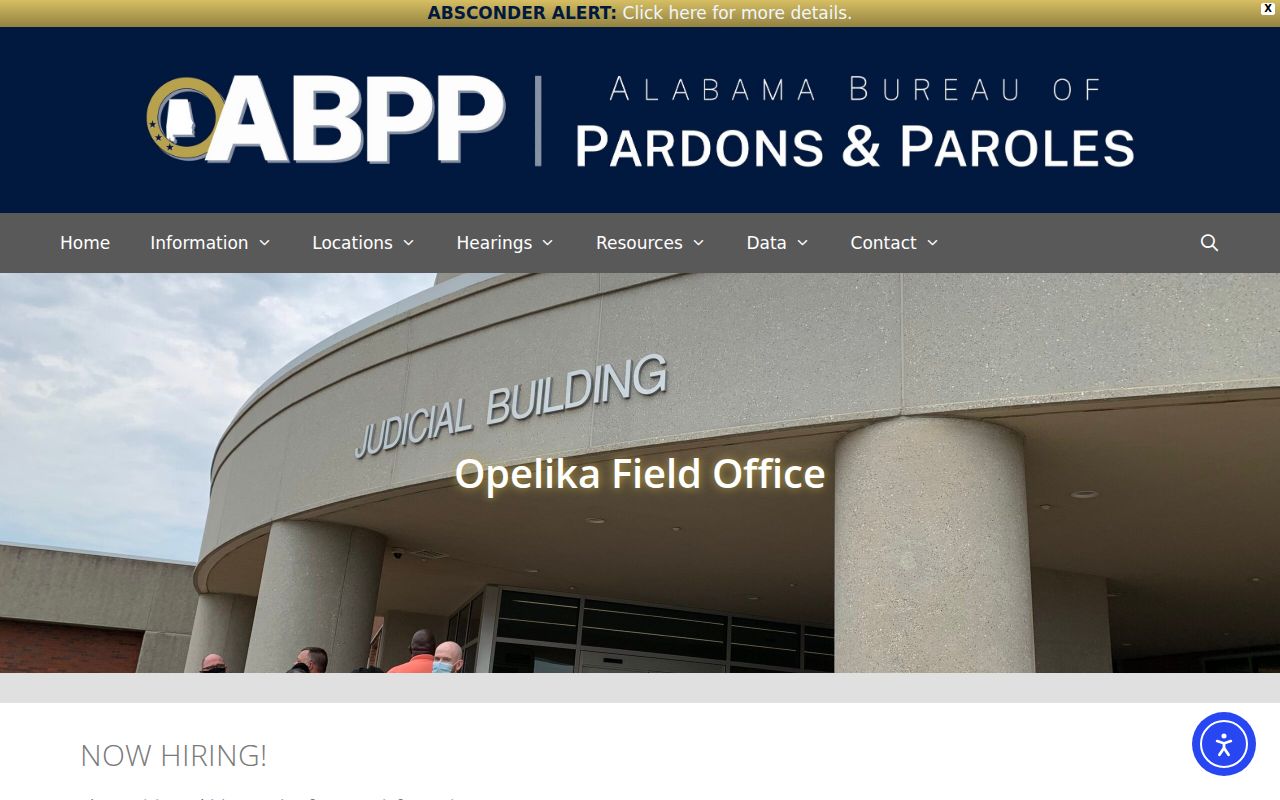
The field office adds current releasable context, while the judgment and docket remain the record of the court's sentence.
The ADOC records and contact source provides the fallback for questions the current-inmate locator cannot answer.
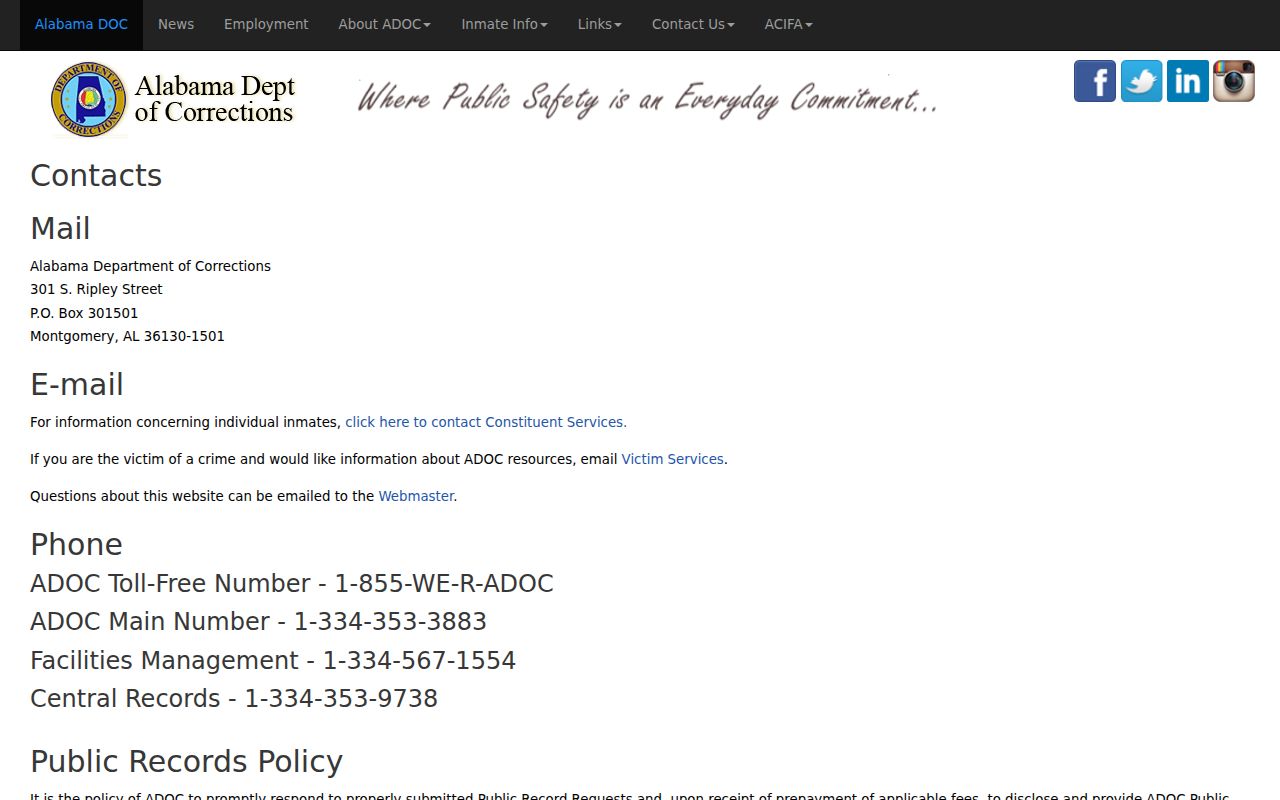
ADOC's locator covers current incarcerated people, not historical custody, and excludes Youthful Offender cases.
Sealed, Expunged & Restricted
Alabama expungement begins in the court, not at ALEA. A Lee County filer first needs certified ALEA CHRI plus certified local arrest, disposition, and case-action material. The CR-65 petition is filed in the circuit court where the charge arose. Lee County states a $500 filing fee unless indigency is found, and separate arrests generally require separate fees.
Eligibility and waiting periods depend on the outcome. Examples include more than 90 days after an acquittal, no-bill, unconditional nolle prosequi, or dismissal with prejudice; at least one year after certain diversion or deferred-program dismissals; and longer periods for specified dismissals without prejudice. Eligible conviction and special statutory routes have added duties and exclusions.
Service is crucial. The petition provides places to name the district attorney, police chief, sheriff, ALEA, circuit or district clerk, municipal clerk, and other holders. An Auburn or Opelika event can create city police, Lee jail, court, and ALEA copies. A holder omitted from service may retain an untouched copy. Juvenile, Youthful Offender, sealed, victim-protected, and unserved-warrant material may be restricted even outside expungement.
Note: An expungement order limits ordinary access but does not mean every legally retained government copy is physically destroyed.
Lee County Criminal Charge Context
Lee County had an estimated 187,847 residents in 2024 across 607.54 square miles. The District Attorney's 2024 annual report recorded 5,235 criminal charges filed. Those measures are not interchangeable: a charge is not a person, case, arrest, or conviction. One case may contain several charges, and a filed charge may later be dismissed, amended, or resolved in another way.
Growth also shapes the court system. The DA's 2025 report said a fourth Circuit judgeship is expected in 2027 and linked that change to added prosecutor and hearing needs. For record users, the key lesson is to read each docket's charge and outcome rather than turn a workload total into a conclusion about one person or place.
The Lee County District Attorney source provides local prosecution and office-program context.
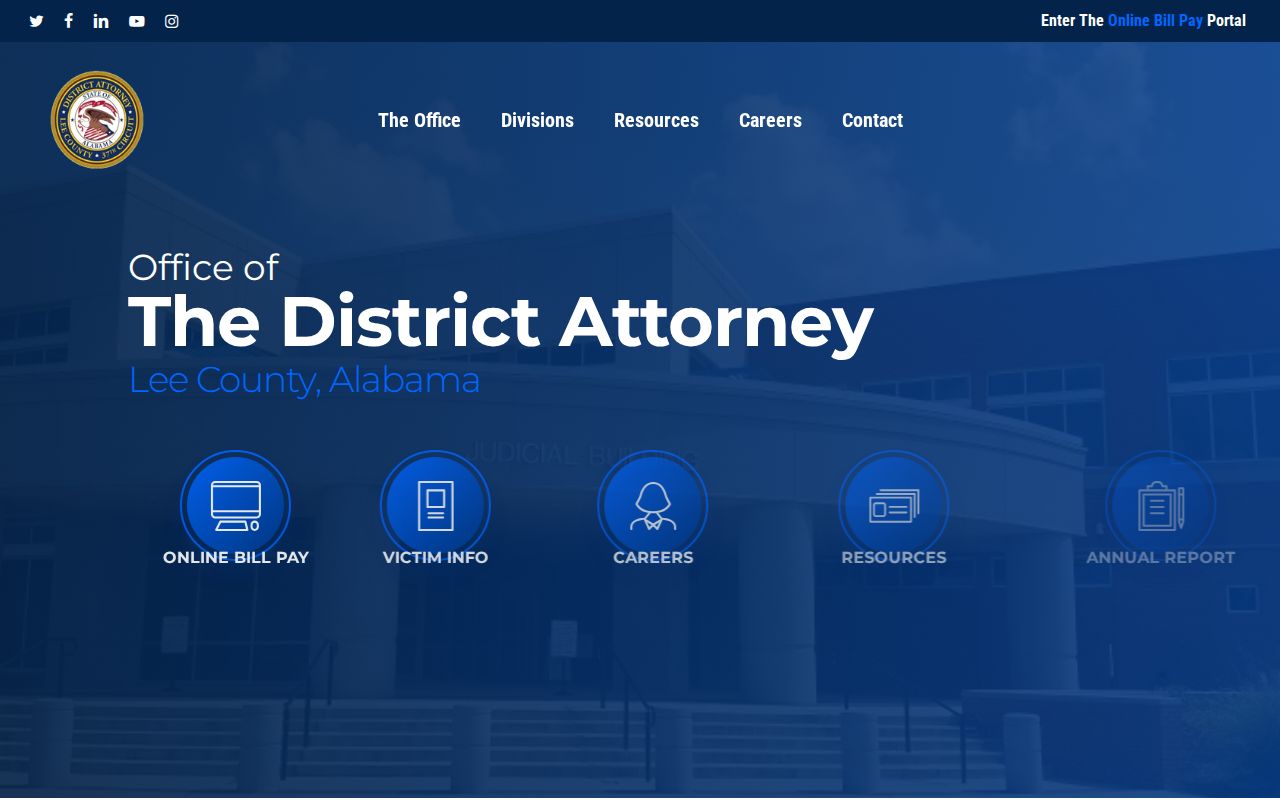
The DA source helps explain the charge pipeline, while filed orders and dispositions must still be requested from the Circuit Clerk.
Criminal Records by City in Lee County
Lee County criminal record access changes across its three largest incorporated cities. Auburn Police and Auburn Municipal Court keep distinct city records. Opelika has its own police records counter and municipal file process even though it is also the county seat. Smiths Station publishes no separate city police department or court portal and routes core law-enforcement and court needs to county agencies.
Auburn Criminal History
83,757 residents · APD reports and Auburn Municipal Court files use separate city channels.
Opelika Criminal History
35,005 residents · OPD, municipal court, and county records coexist in the county seat.
Smiths Station Criminal History
5,583 residents · Sheriff and Lee District or Circuit Court provide the main routes.
The official Census comparison supplies the county and city estimates used here.
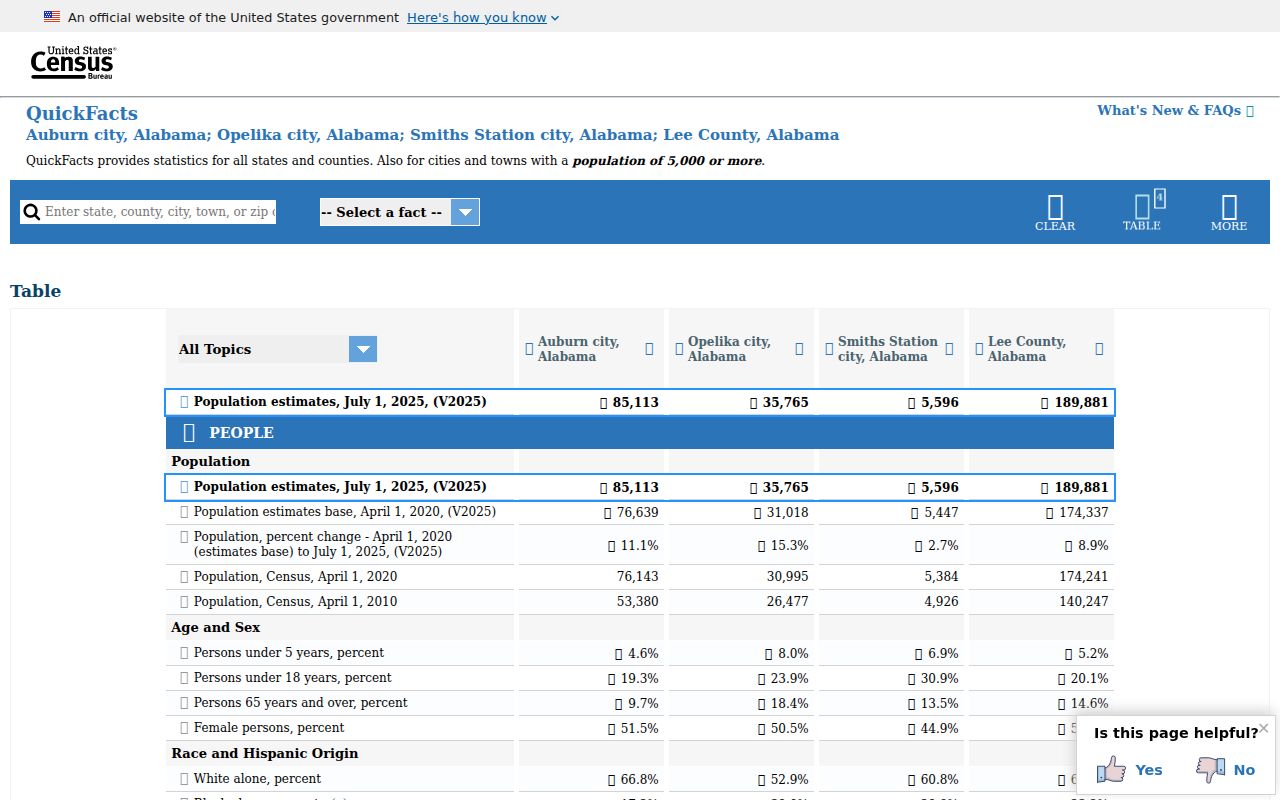
The scale differs by city, but the issuing agency and court on the record remain more useful than an address alone.
Lee County Sheriff Record Tools
The Lee County Sheriff's Office Alabama mobile app advertises routes for inmates, recent arrests, corrections, visitation, records requests, case information or status, sex-offender links, victim notification, tips, news, and alerts. Inspection did not verify that any record tool is app-only. The website and GovQA Public Records Center remain direct official channels for a request.
The app can be useful as a mobile gateway, but its labels do not merge the source records. An inmate card is still a jail record. Case status must be confirmed with the proper court. A sex-offender link leads to a registry product, and a records request goes to the office that holds the requested file.
Note: Neither the sheriff app nor the website turns a booking card into a complete Alabama criminal-history record.