
Running a Sex Offender Check in Lee County
The ALEA Community Information Center is Alabama's official public search. Local law enforcement supplies registration and verification updates to ALEA's Criminal Justice Information Services Sex Offender Registry Unit. No separate Lee County registry database was documented. A name search helps when identity is known, while address, city, ZIP, state, and radius controls support location-based review.
A neutral capture of the state community search shows the official starting point.
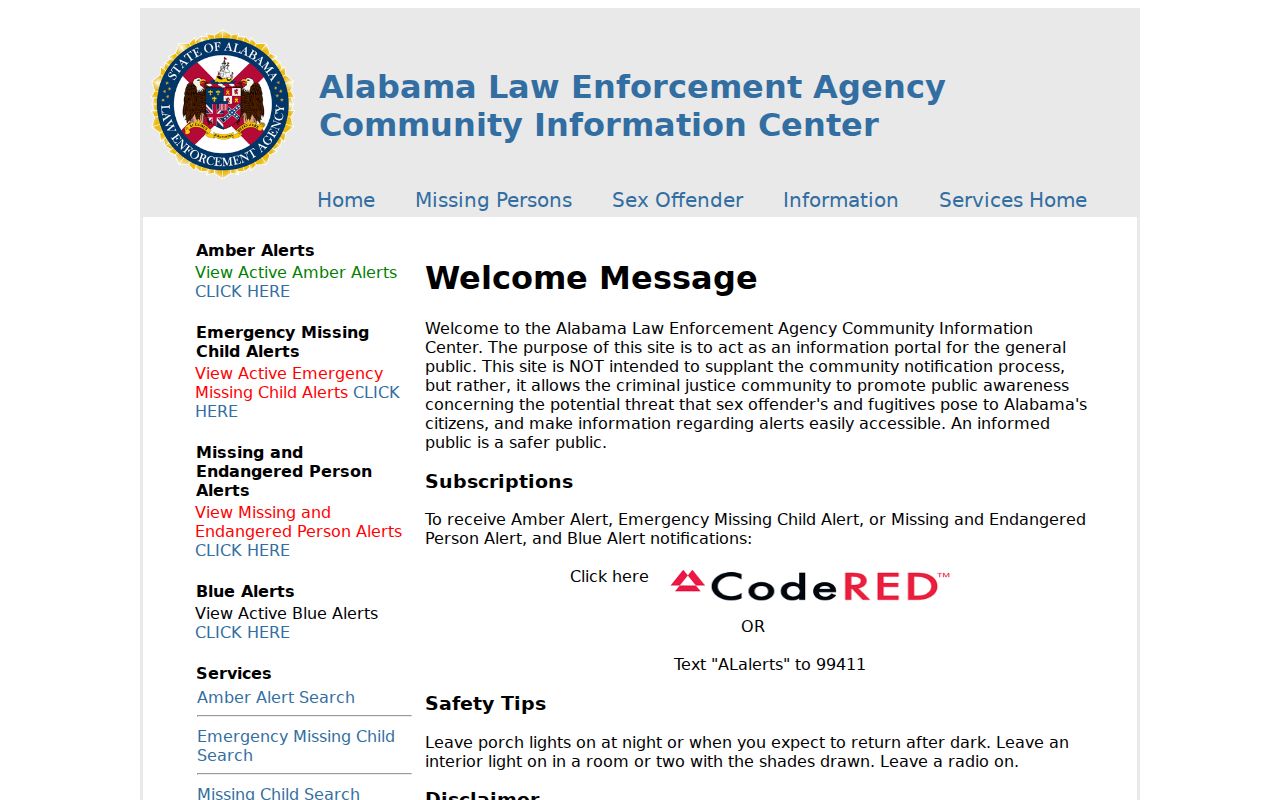
The public product shows only information authorized for release. Some youthful-offender, juvenile, or out-of-state circumstances can limit what appears.
Lee Registry Challenge Fallbacks
During research on July 14, 2026, the contracted Alabama registry interface returned a Cloudflare challenge. That access limit prevents a claim that every live option or result was fully inspected. It does not make the registry unavailable in all sessions. Retry the official ALEA Community Information Center in a standard browser, allow required site functions, and avoid repeated rapid requests.
If the challenge persists, use the U.S. Department of Justice national search and contact the Lee County Sheriff's Office or responsible city police agency for a suspected local registration issue. ALEA remains the statewide publisher. The local agency is the practical correction and noncompliance contact because it collects and verifies the source information.
Do not interpret a blocked page as a no-match. Save the exact name and location inputs, note when the error occurred, and try the official fallback without using an unofficial people-search service. When a Lee County record appears in NSOPW but the Alabama page still fails, the listed jurisdiction can help identify the responsible local registration office.
Searching the ALEA Sex Offender Registry
ALEA operates the Alabama Sex Offender Registry through its community interface. Use narrow inputs first, then expand. The challenge encountered during inspection hid the required markers and exact drop-down options, so the table reports only the controls confirmed by research.
- Open the official Community Information Center and choose the sex offender search.
- Enter a first and last name, or use address, city, ZIP, state, and radius controls for a place-based check.
- Compare aliases and physical details before concluding that a result is the right person.
- Read the full registration status, offense, jurisdiction, address, and other released profile fields. Report a suspected error to law enforcement.
| Field Label | Type | Required | Notes |
|---|---|---|---|
| First Name, Last Name | Text | Not verified | Required markers were not visible past the challenge. |
| Address | Location input | Not verified | Use for a place-based search when available. |
| City, ZIP | Location inputs | Not verified | Supports local filtering. |
| State, Radius | Drop-downs | Not verified | Exact options were not visible during inspection. |
| Search, Clear | Buttons | Actions | Submit or reset the entered controls. |
Note: A name match should be checked against aliases, physical details, offense jurisdiction, and registration location before it is treated as the same person.
Lee Registration Reaches ALEA
Lee County registration data follows a local-to-state flow: local law enforcement registers and verifies → the agency forwards changes → ALEA CJIS updates the statewide publication. This split matters when a record appears wrong. The Sheriff or responsible police department checks the local source facts, while ALEA manages the public state system.
The ALEA registry overview explains the state unit's role and limits on public display.
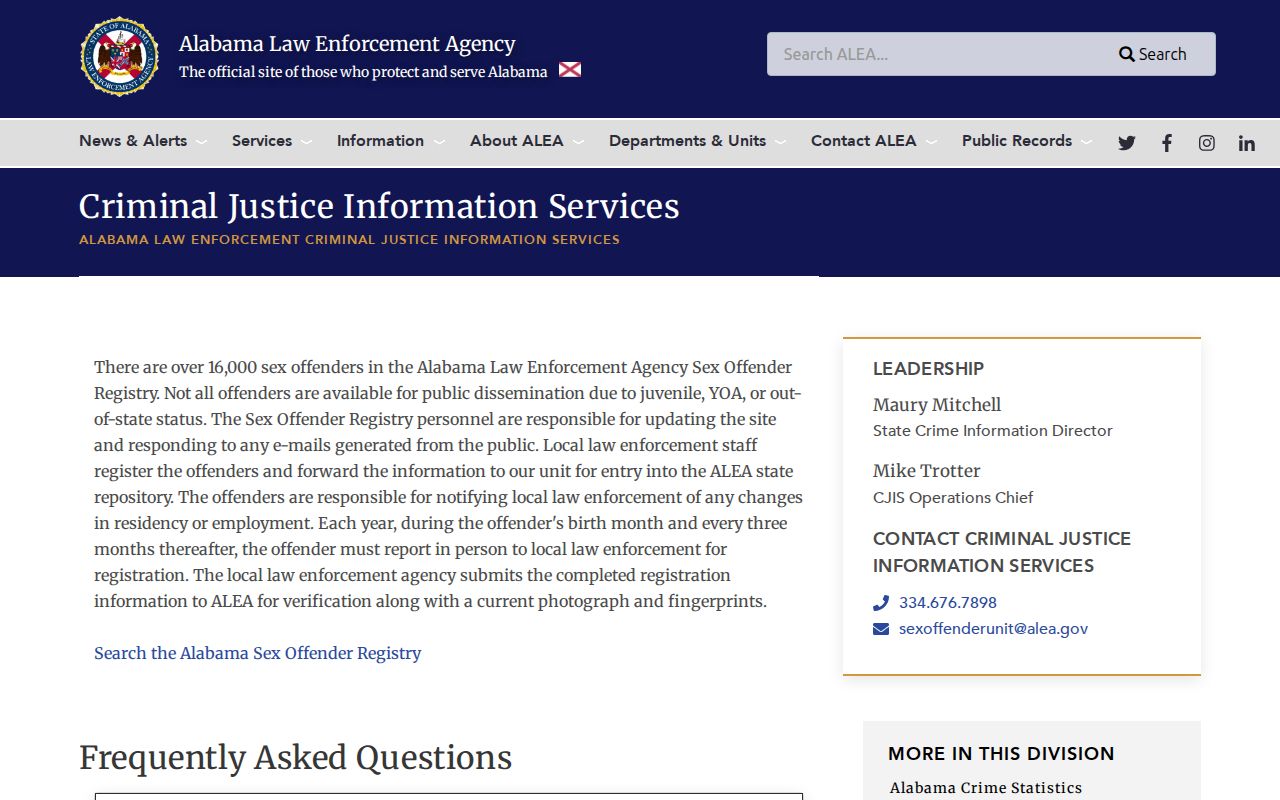
The publication step does not replace the Circuit Clerk's conviction file, which holds the charging instrument, judgment, and sentence.
This division also sets the correction path. Ask local law enforcement to check a residence, compliance, or registration update. Ask the clerk for the underlying conviction file. Contact ALEA about the statewide public display after the source facts have been checked. Each office controls a different part of the Lee County registry trail.
What a Registry Profile Shows
The Alabama public profile can combine identity, location, offense, and compliance information. No identifying values were collected during research. The listed address is registration data, not proof by itself that the address violates a restriction.
| Name and Aliases | Published identity names used to distinguish a result. |
|---|---|
| Photo and Description | Photo, sex, race, DOB or age, height, weight, hair, eyes, scars, marks, and tattoos as authorized. |
| Registered Address | Address and registration jurisdiction reported through local law enforcement. |
| Offense | Offense, jurisdiction, conviction date, and an authorized victim category. |
| Registration Status | Registration and compliance information available for public release. |
| Other Released Fields | Vehicles and public work or school information may appear when Alabama law authorizes publication. |
A profile establishes registry status. It does not predict future conduct, supply the full court file, or establish a new offense from the displayed address alone.
Public offense data may include the jurisdiction and conviction date plus an authorized victim category. Read those labels as registry fields, not as a substitute for the charging document or judgment. A vehicle, workplace, or school field is also only the information Alabama law permits the system to publish. Verify an apparent conflict with the agency that maintains the registration.
Lee Registry Searches Across States
The National Sex Offender Public Website is the official Department of Justice layer for a search that may cross state, territorial, or tribal boundaries. ALEA is the best source for Alabama's own published record, while NSOPW can query participating jurisdictions through one national entry point. Differences may reflect publication law, update timing, or search controls.
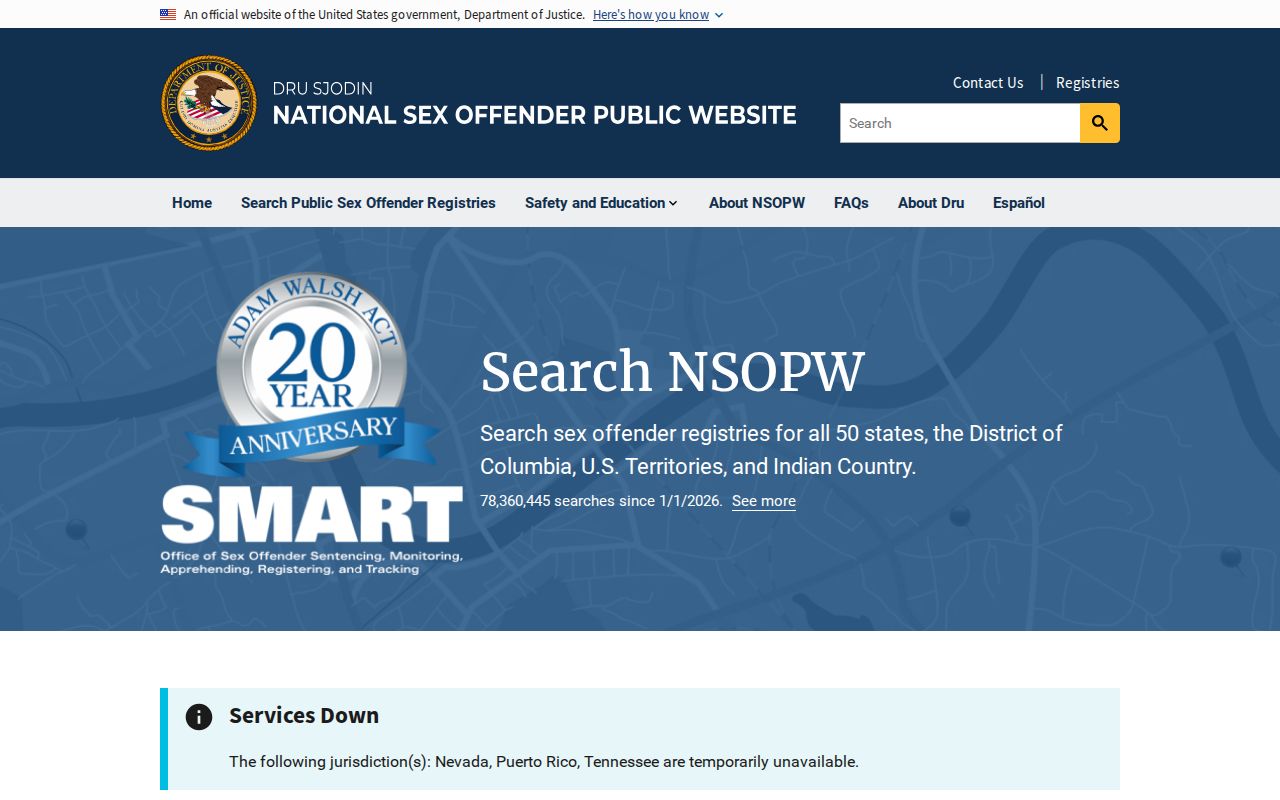
Use NSOPW as a fallback or cross-state check, then return to the listed jurisdiction's official registry for its full public detail.
Registration Requirements and Levels in Alabama
Alabama does not use a simple public federal Tier I, II, and III table for these records. Its actual statutory framework distinguishes adult sex offenders, youthful offenders, and juveniles. The duties and public visibility differ by legal category. Converting those categories into federal tiers would misstate Alabama law.
| Alabama Category | Duration and Verification | Public Visibility |
|---|---|---|
| Adult sex offender | Local registration, quarterly verification under §15-20A-10, and generally lifetime duties. | Public notification rules apply. |
| Youthful offender | Controlled by the court and Alabama statutory classification. | More restricted public treatment. |
| Juvenile | Juvenile risk assessment and category-specific statutory duties. | Limited, risk-dependent notification. |
ALEA explains that not every person in its repository can be publicly disseminated. A missing public result can reflect the governing category, not a finding that no protected record exists.
Lee Adult Registry Verification
Alabama Code §15-20A-10 sets the quarterly verification framework for adult sex offenders and generally imposes lifetime registration duties. Verification occurs through local law enforcement, which then supplies updates to ALEA. That schedule applies to the adult statutory category. It should not be copied onto a youthful-offender or juvenile case without checking the category-specific law and court status.
A stale-looking date or address should be reported, not treated as a proven offense. Give the Lee County Sheriff or responsible city police agency the profile details and the reason for concern. The agency can compare the public result with its current registration file. A member of the public should not attempt to conduct a compliance check in person.
Note: Quarterly adult verification does not turn Alabama categories into federal tiers or make restricted youthful and juvenile records publicly searchable.
Lee Registry Address Limits
Alabama Code §15-20A-11 includes a 2,000-foot residence restriction tied to specified protected locations, while §15-20A-13 addresses work-location limits. A map point or address on a profile does not, standing alone, prove a violation. Boundaries, location type, current facts, exceptions, and the governing category can require official review.
Send a suspected address problem to the Lee County Sheriff or the police department responsible for that registration area. Law enforcement can compare the report with the agency's current registration file. Do not visit the address, contact the registrant, or publish conclusions based only on a map result.
The safest report is factual. Provide the official profile link, the location at issue, the time of the observation, and what appears inconsistent. Avoid assumptions about motive or legal status. Officers can decide whether the reported facts call for verification, while the public record can be updated through the established local-to-ALEA process.
Lawful Use and Community Notification
Community notification supports awareness and practical safety planning. It must stay within the law. Alabama Code §15-20A-43 protects registrants and their family members from solicitation, threats, harassment, and other criminal conduct based on registry status. Suspected noncompliance belongs with local law enforcement, not a private confrontation.
Use registry information lawfully: Under Alabama Code §15-20A-43, solicitation, threats, harassment, or similar criminal conduct against a registrant or family because of registry status is a Class C misdemeanor unless another law provides a greater penalty.
A listing is not permission to contact, shame, follow, threaten, or punish anyone. Call law enforcement if a profile appears inaccurate or a person may be noncompliant. In an emergency, call 911.
Use the registry for measured awareness, such as confirming an official listing and planning how family members will respond to a safety concern. Do not redistribute profile photographs or encourage others to approach the person. If conduct appears criminal or urgent, describe the conduct to law enforcement rather than relying only on registry status.
Lee County Registry App Routes
The official Lee County Sheriff's Office Alabama app advertises sex-offender links, victim notification, tips, news, and alerts along with other Sheriff services. Research did not confirm that any registry tool is app-only. The state search and direct agency channels remain available when an app feature fails.
The official Apple App Store listing shows the iPhone route.
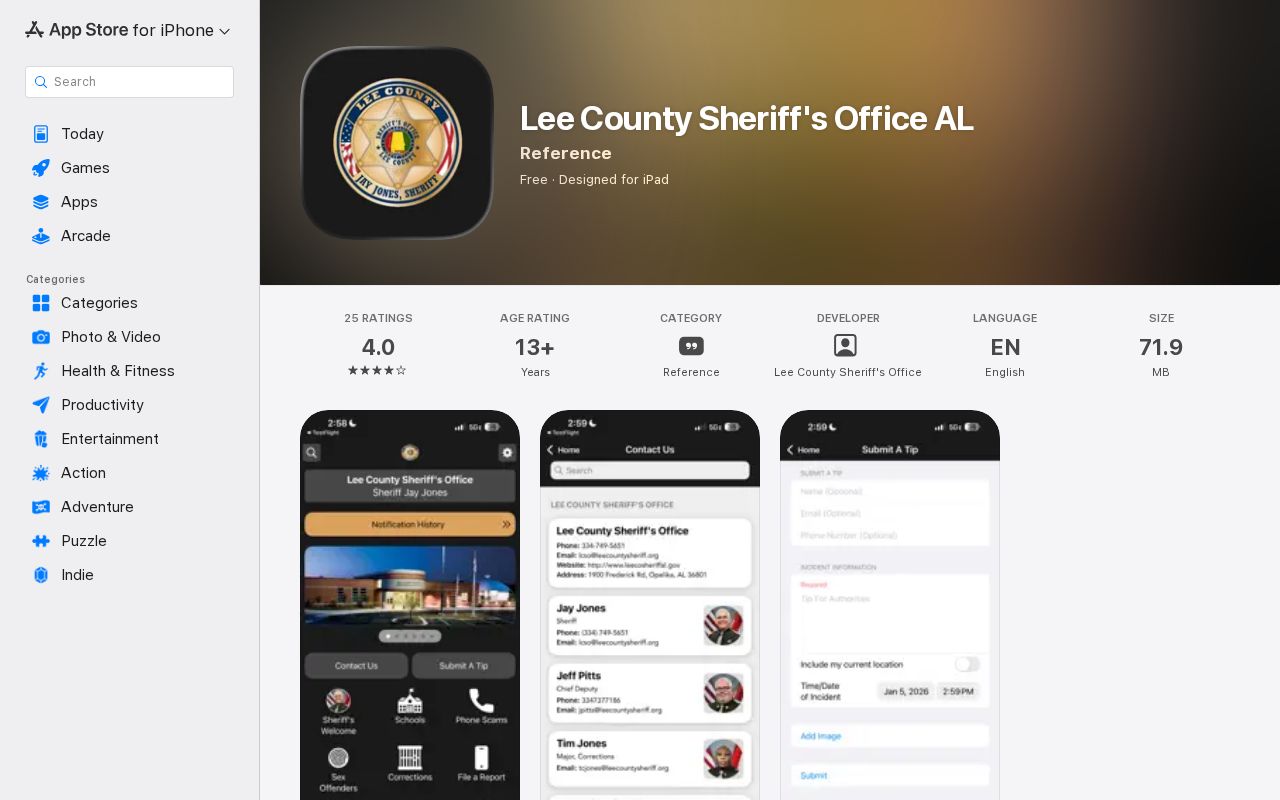
The app groups Sheriff links, but ALEA remains the statewide registry publisher.
The official Google Play listing provides the Android route.
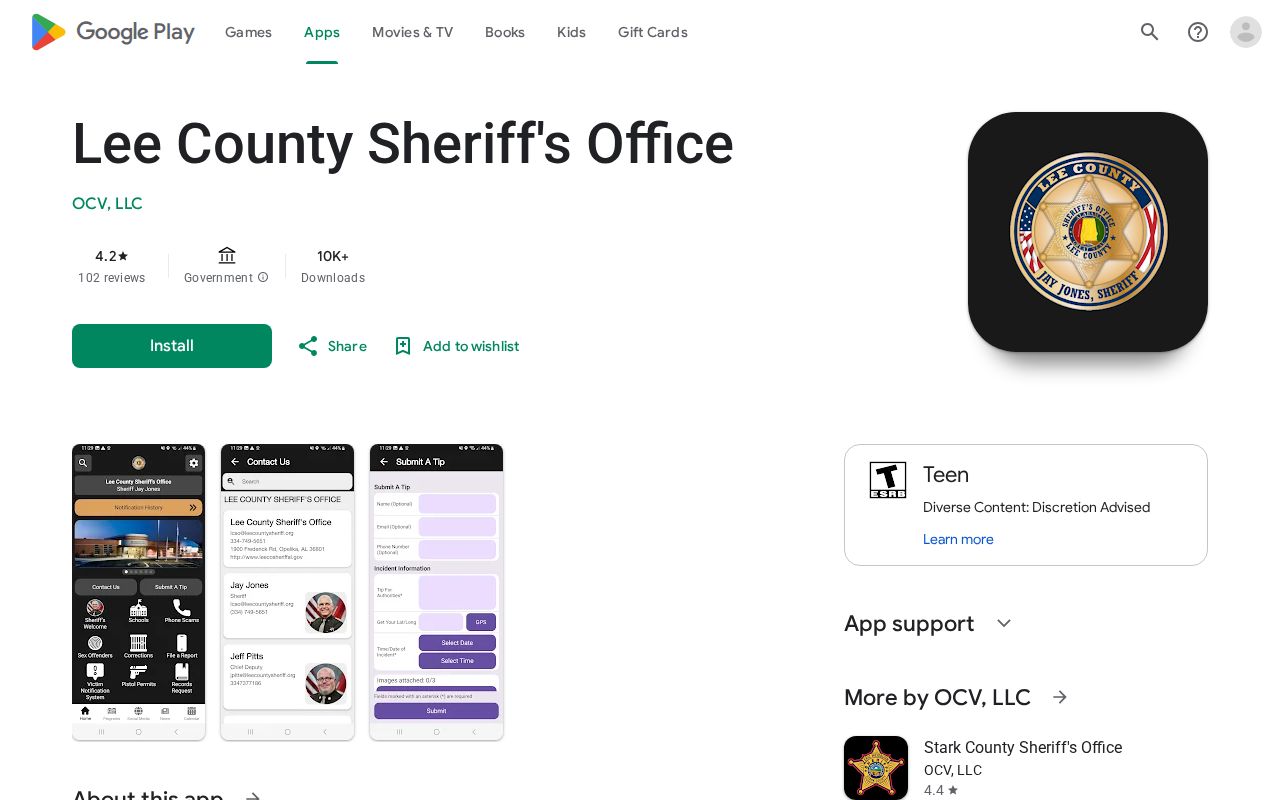
Whichever device is used, report suspected noncompliance through law enforcement and do not confront the person shown.